Insights on arboriculture, tree management, and conservation from the Isle of Man.
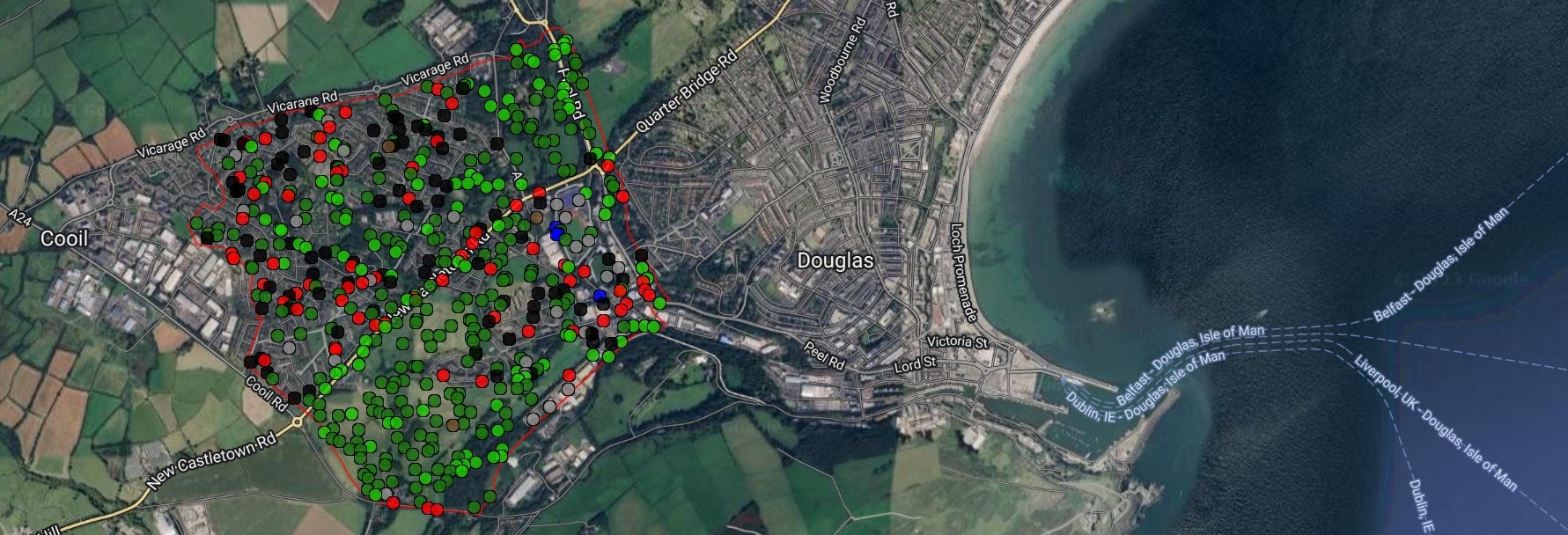
In a September 2022 blog post titled A Shot in the Dark I wrote about the importance of having baseline data on our urban tree canopy cover (TCC). To briefly recap, baseline TCC data is important because it provides a metric that is easy to comprehend, allows us to monitor change over time, to set [
Strength plays such a marvellous game – it moves through the things of the world like a servant, groping out in roots, tapering in trunks, and in the treetops like a rising from the dead. These are lines from a poem by the R.M. Rilke. They were written to provide insight in the human condition, [&he
The Strategic Plan sets out the general policies for the development and use of land across the Island and plays a pivotal role in the determination of planning applications. On the 21st July Government announced a full review of this policy document. It is of interest to Manx Roots because this is
When the ‘elm tunnel’ at St. Mark’s was threatened by a proposed development there was a huge public outcry. At the time, it struck me as odd there was so much public support for the campaign to save those trees, but so little awareness of the disease which threatens the entire elm population on the
I have recently written about the benefits of street trees and how they can be planted without causing conflict. Street trees fit within the broader category of ‘urban trees’ which can also be located in parks, public gardens, urban woodlands, schools, church yards, and many other public spaces, not
In my last blog post I championed a special type of tree: The Street Tree. A couple of people pointed out that if we planted trees in our streets, they are likely to get too big and cause nuisance issues and damage our infrastructure. The planting of any street tree which caused such issues could [&
Trees don’t only belong in forests and woodlands. They can grow and thrive among us, in our gardens, streets and public spaces, if we help them. The special type of tree I would like to champion in this blog is not of a particular species or genus, it’s of a place: The ‘street tree’. There […
If you find yourself talking to someone you don’t know at a Christmas soiree, a common ice breaker you often hear is the innocent question ‘So, what do you do?’. My answer (an Arboricultural Consultant) often comes with a standard response and follow-up question: A what?! What’s that then? So, what
I have mentioned in previous blog posts that until recently I was a tree officer at DEFA. That meant that every year I reviewed hundreds of applications to undertake tree work. Since I have been working for Manx Roots I have helped quite a few people with their tree applications, which means I have
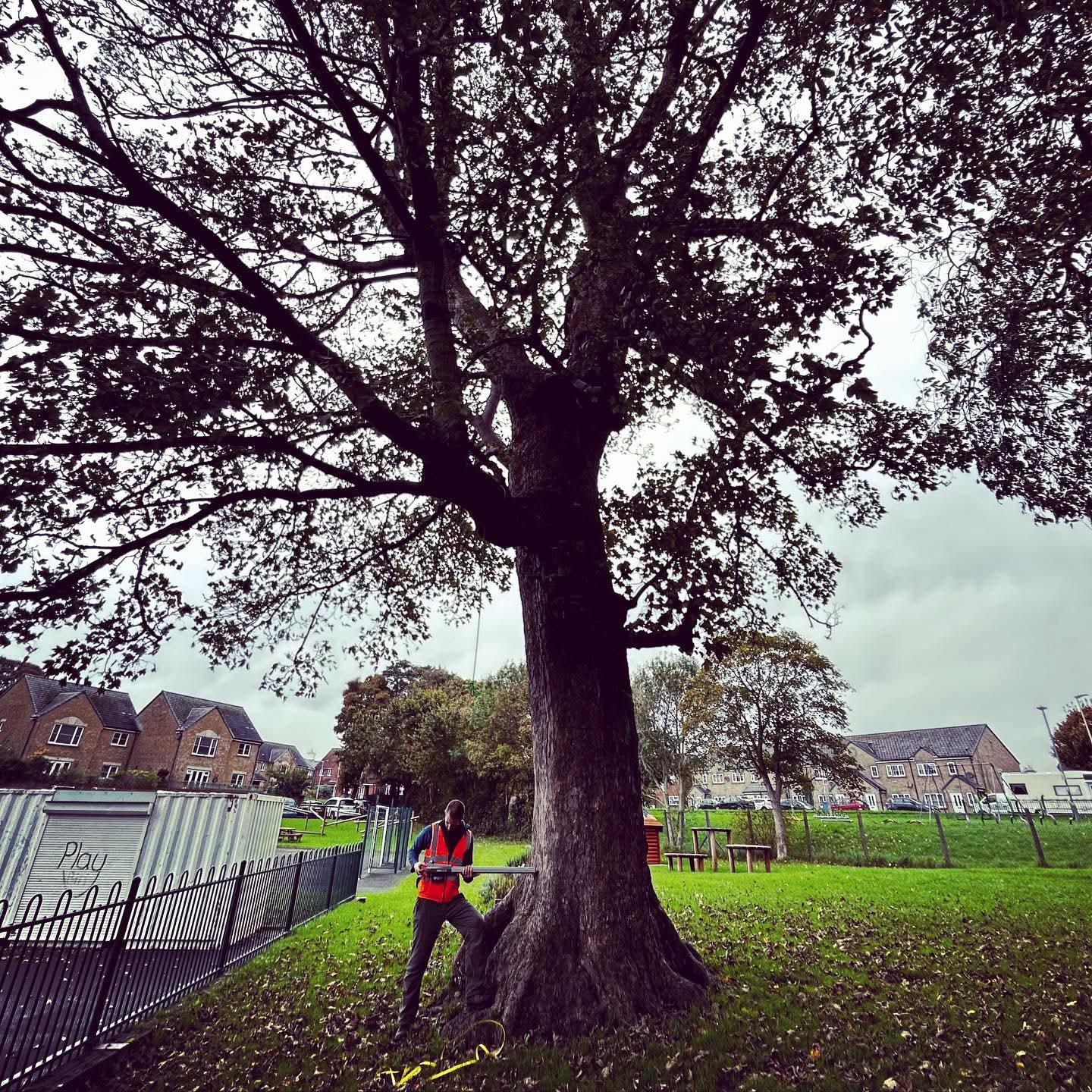
On the Isle of Man, 72% of the resident population live in towns and villages (and cities, of course, before Douglas gets upset). It is widely accepted that trees in urban and suburban areas provide a range of social, economic, and environmental benefits. Nobody is saying that planting trees is all
Our island is precious. Land is a finite resource that must be used wisely for current and future generations to thrive. And if we hold our island in high regard, it stands to reason that when we allow development to occur, we should expect nothing but the best. There are many issues associated with
If you don’t know what ash dieback is, it is worth checking out DEFA’s webpage: www.gov.im/ashdieback. This tree disease is going to dramatically change the appearance of our roads and landscapes over the next 10 years. A question I am often asked is “what are the government doing about ash dieback?
By Andrew Igoea, Senior Arboricultural Consultant Until recently I was the Government’s senior tree officer. Part of my role at DEFA was to administer the Tree Preservation Act 1993 (TPA), so I can speak with some authority about the law and policies which are meant to protect trees on the Island, a
A simple guide for humans and other animals Who needs air? Everyone knows that trees absorb carbon dioxide (CO2) and release oxygen (O2), but did you know that trees also remove nasty particles from the air we breathe? Nasties, like sulphur dioxide (SO2), nitrogen oxides (NO), carbon monoxide (CO),
Here are a few pictures from a recent project where we developed a tree protection plan and arboricultural method statement, on behalf of the Isle of Man Government Department for Enterprise, for the installation of a popup-pub during the 2018 Isle of Man TT.
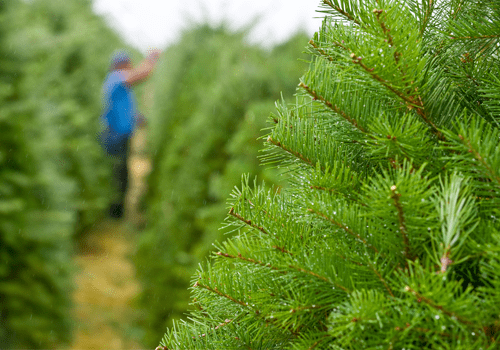
Like it or not, the festive season is here and what Christmas would be complete without the tree? But will it be a plastic tree or a real tree that will stand proud in your home this year? We were once led to believe that having a fake tree was somehow more environmentally friendly for […]
Removing a sick Sycamore tree nestled in amongst the 18th and 19th century graves at Kirk Michael Church, Isle of Man. For more details on our tree surgery, tree report and arboricultural consultancy services please click here.
This 100+ft Spruce tree was on the Apemann site at South Barrule Plantation. It was at risk of falling onto the zip-wire, as did its neighbour, and was marked for removal in a recent survey. It was a straightforward and fun job.
Lapsed Beech hedge removal, Douglas This old Beech hedge had been left to go and, unfortunately, was well past saving. Its loss will be mitigated with the replanting of new suitable trees (pics to follow). If you would like a quote for tree work, or some advice regarding the management of your trees
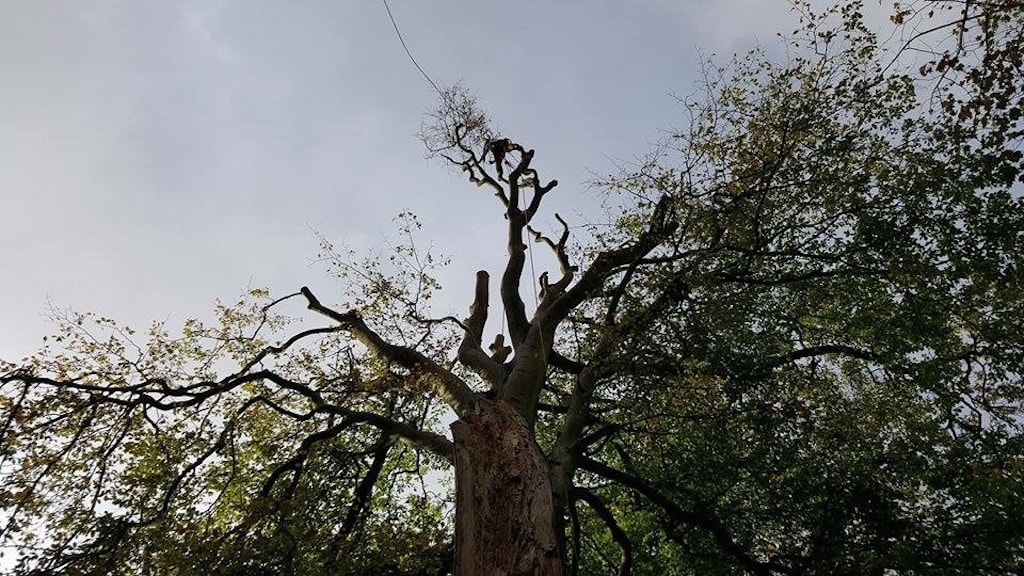
This huge old beech tree stands in the grounds of a stately home in Douglas, and recently lost around 50% of its crown due to a fungal decay (Ganoderma australe) causing a massive branch to collapse under its own weight.
We know trees are an important part of our local landscape and a vital part of the local ecology, but now more than ever must we be preserving the island’s trees. The island has less than 6% total tree cover, compared to 12% in UK and 35% in Europe, and with the scheduled removal of approximately [&
This large Ash tree, although stable, had been subjected to soil compaction that had caused root die-back. Loss of some of the root system had lead to the tree's decline and the formation of substantial deadwood in the crown. This tree would have never recovered, but instead continued to die back un
CO2 in our atmosphere has been a hot topic for some time but the evidence of its effects on our trees, and the way in which our trees can mitigate its effects, is slowly coming to the fore. The following information is a collection of facts outlining how increased levels of CO2 may be both […
Tucked between farmland and modern housing in Crosby on the Isle of Man, is a section of privately owned registered woodland that's history shows of one man's true dedication to his beliefs, as well as being home to some mighty fine trees.
Saying goodbye to an old tree can be very sad. This tree has stood in the grounds of Lorne House since the late eighteen hundreds but has been in gradual decline for many years. Now displaying very little healthy growth in a crown that's over 50% dead, and two cavities that make us question her safe
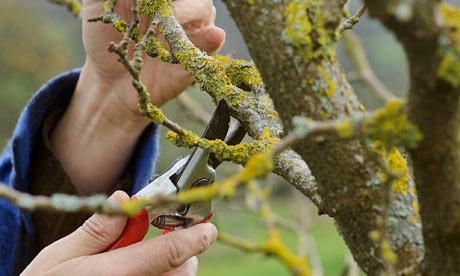
The summer is fast approaching, all of our sleepy trees are finally waking up and breathing life into 2014. Although this is not really the time of year to be carrying out any major pruning work, tree pruning is happening because this is the time of year we get back into our gardens and begin [&hell
With all of the wild weather we've had lately it's not surprising that so many trees have fallen or been badly damaged. As upsetting as it is to loose our large and mature trees it is ultimately a natural process that will allow the next generation of large, mature and beautiful specimens to grow in
January through to March is the ideal time to plant trees, but let us offer some advice to avoid any problems for you or the tree in the future.
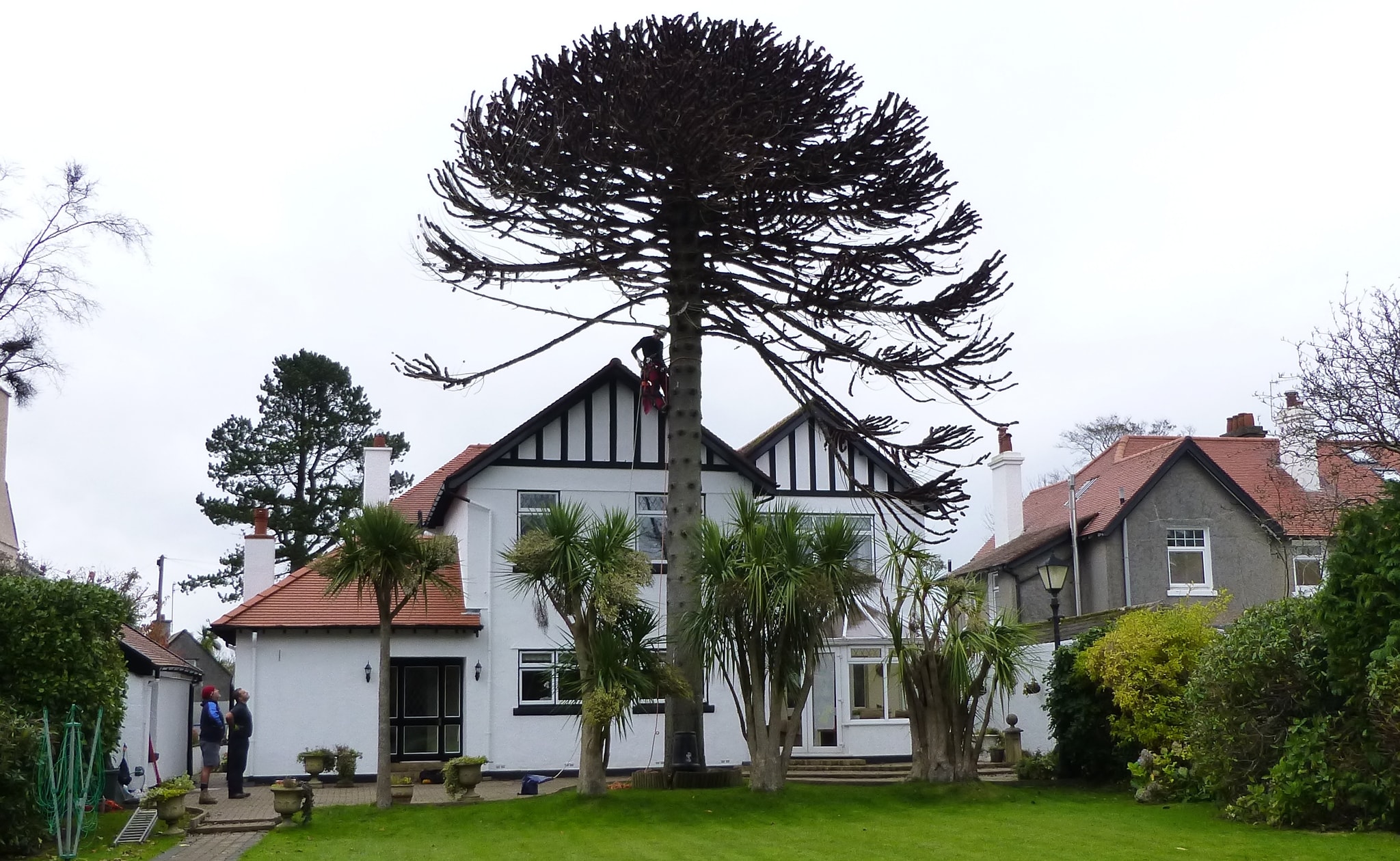
Although this was a large and less common tree, it was all but dead and beginning to shed limbs very close to this family home. Monkey Puzzles will generally die-off from the lower branches upwards in response to root distress caused by poorly draining and compacted soils.
Well, November is here again and those once leafy and graceful trees will now stand naked and somewhat dreary until they awake next spring, but please don't turn a blind eye to them as the next few months is the ideal time to carry out that heavier pruning work that will pay dividends next summer [&
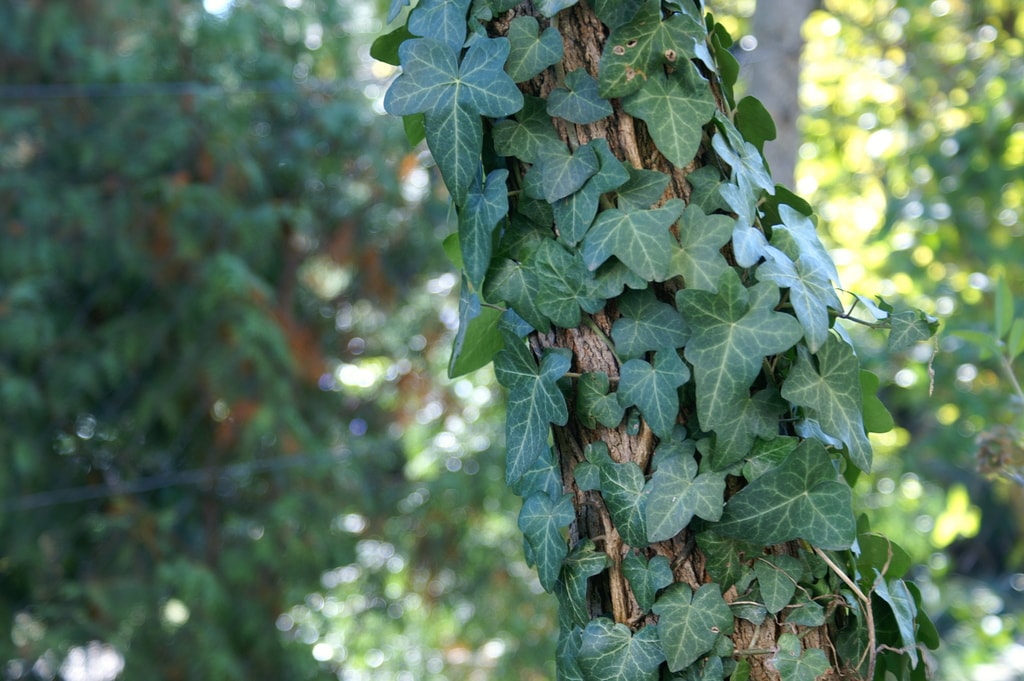
Much maligned, ivy is often accused of strangling trees on which it grows. The reality is often less sinister but there may be times when its control is advisable. In the border, ivy’s dense growth can swamp other plants and control here is often needed. What is ivy?
Creating the island’s first forest by expanding and linking the glens, plantations and woodlands between Ramsey and Sulby. The aim is not to cover the landscape in dense woodland, but to increase the woodland cover from 20% to 30% over the next 30 years.
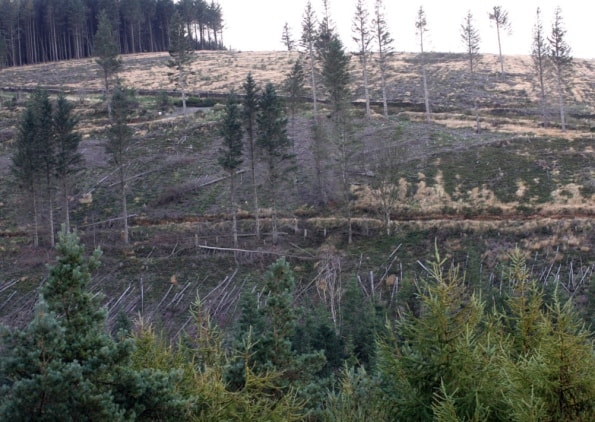
A disease that affects larch trees is continuing to ravage the island’s forestry, with about 50 hectares of trees felled and sweet chestnut, beech trees and garden shrubbery plants also affected.
Removing a mature Beech that was causing the embankment, on which a house had been built, to move. The tree was shallow rooted due to it's location on the edge of a rocky gorge and was granted a license for removal on the grounds that if it shifted it could compromise the house.